CASE FILE · KM-01
Fashion & Beauty Access as Infrastructure.
When appearance shapes how students show up for class, interviews, and formals, access stops being superficial. It becomes infrastructure.
Mixed-Methods ResearchSurvey Design & AnalysisQualitative Thematic AnalysisData StorytellingStrategic RecommendationsStakeholder Communication
Case File Snapshot
StakeholderNotre Dame Diversity Council, University Administration
RoleChair of Research & Development, Lead Researcher & Analyst
Dataset83 Students • 6 of 7 Colleges
Ranking, Likert-Scale, Demographic & Open-Ended Survey Data
MethodMixed-Methods: Quant + Qual, Cross-Segment Comparison
OutputsAdministrator-Facing Research Report, 3 Strategic Recommendations
Applied ValueTurns student experience data into a decision-ready case for institutional investment
The Story
The Question
What role does access to fashion, beauty, and grooming resources play in whether Notre Dame students feel prepared, confident, and included in the classroom, interviews, and everyday campus life?
The Tension
Appearance-related needs were being treated as personal or cosmetic. But students described them as functional, something to handle before a career fair, a formal, or the first week of classes. That gap was worth testing at scale.
The Insight
Clear gaps emerge across attire, hair, and access systems.
The Approach
01Research DesignCombined rank-order, Likert-scale, and open-ended questions in one instrument.
02Data CollectionReached 83 respondents across 6 of 7 colleges through community-engaged outreach.
03Quantitative Survey AnalysisUsed descriptive statistics on Likert and rank-order data to size each need.
04Qualitative Thematic AnalysisCoded open-ended responses into themes: cost, fit, access, timing, and trust.
05Cross-Segment ComparisonCompared response patterns across class year, gender, and school representation.
06Insight SynthesisCombined quant and qual findings into one decision-ready narrative.
07Strategic Recommendation DevelopmentTranslated synthesized insights into three recommendations for administrators.
Tools (Secondary)
TableauExcelCanva
Key Findings
InsightEvidenceStrategic Meaning
Professional attire is a top unmet need.Evidence82% rank professional attire a top-2 need, but 48% call current access inadequate.Strategic MeaningThe most-wanted resource is also the least available. First priority for funding.
Hair care is the highest-priority beauty need.EvidenceHairstyling ranks #1, hair products #2; 66% call it a top priority.Strategic MeaningOutranks every other beauty need. This reads as identity, not upkeep.
School-spirit apparel access falls short too.Evidence59–60% say the University doesn’t provide adequate access to affordable school-spirit apparel.Strategic MeaningThe gap isn’t confined to career prep. It’s a campus-wide affordability pattern.
Demand is seasonal, but the need is ongoing.EvidenceDemand peaks around formals and career fairs, but 58% want a recurring appointment every 3–4 weeks.Strategic MeaningA seasonal pop-up model under-serves a need students expect on a standing cadence.
Barriers are structural, not just financial.EvidenceBarriers cluster around cost, product fit, timing, visibility, and trust, not price alone.Strategic MeaningA subsidy alone won’t close this. The fix has to work across every lever, not just price.
The System
Access breaks down across six levers:
- Availability — Does it exist on campus?
- Affordability — Is it priced for a student budget?
- Fit — Does it serve the full range of student needs?
- Visibility — Do students know it exists?
- Timing — Is it available when demand peaks?
- Trust — Do students feel safe using it?
Output Preview
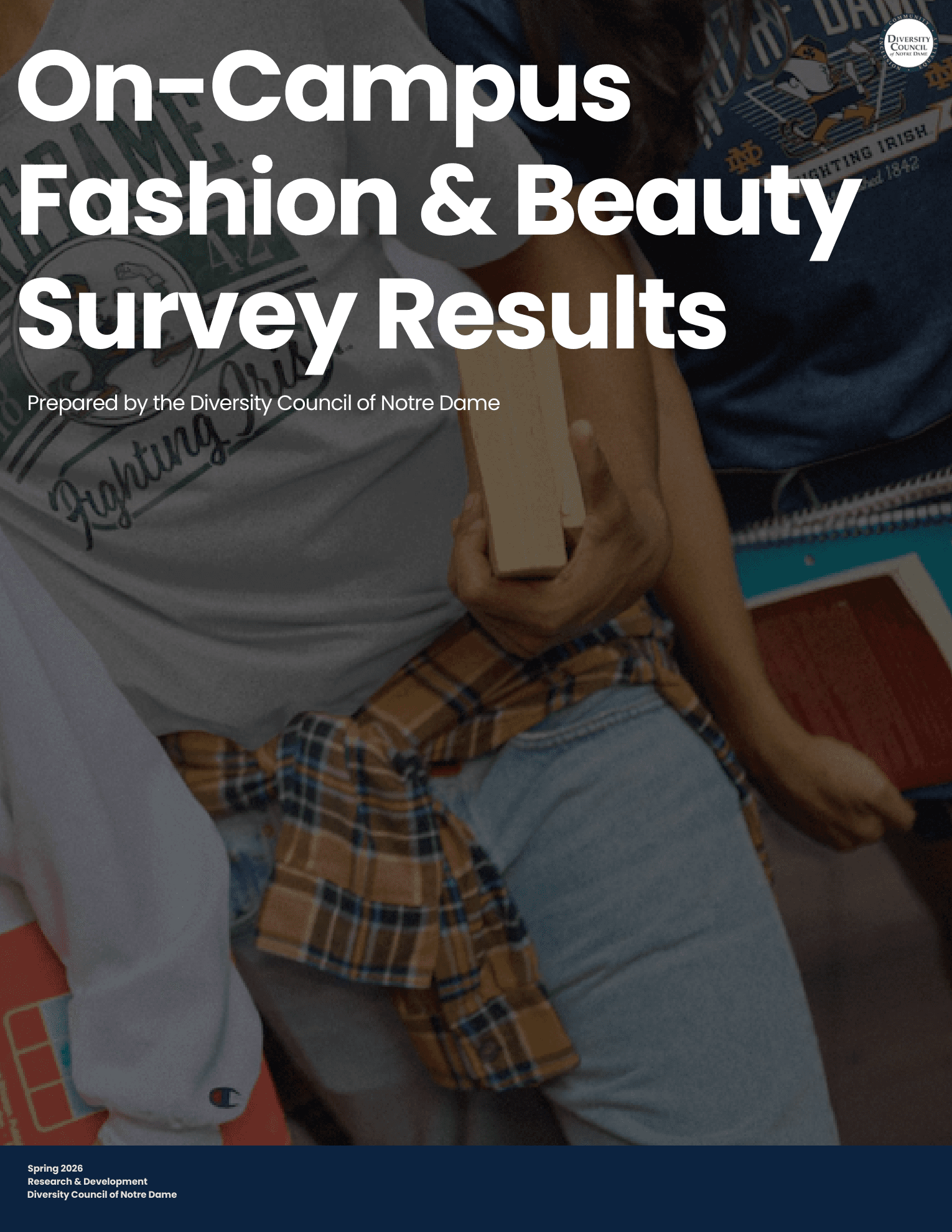
Cover · 1/4
Strategic Recommendations
Professional & Event Resource Exchange
Establish a permanent Career & Formal Closet for low-barrier access to event and business attire.
Subsidized Grooming & Styling Access
Fund visibility for University Hair Stylists and a pathway for student stylists and braiders.
Expanded On-Campus Beauty Access
Broaden product mix, improve the vending experience, and add real-time inventory visibility.
Selected pages from the final administrator-facing research report.
Report Available on Request →